

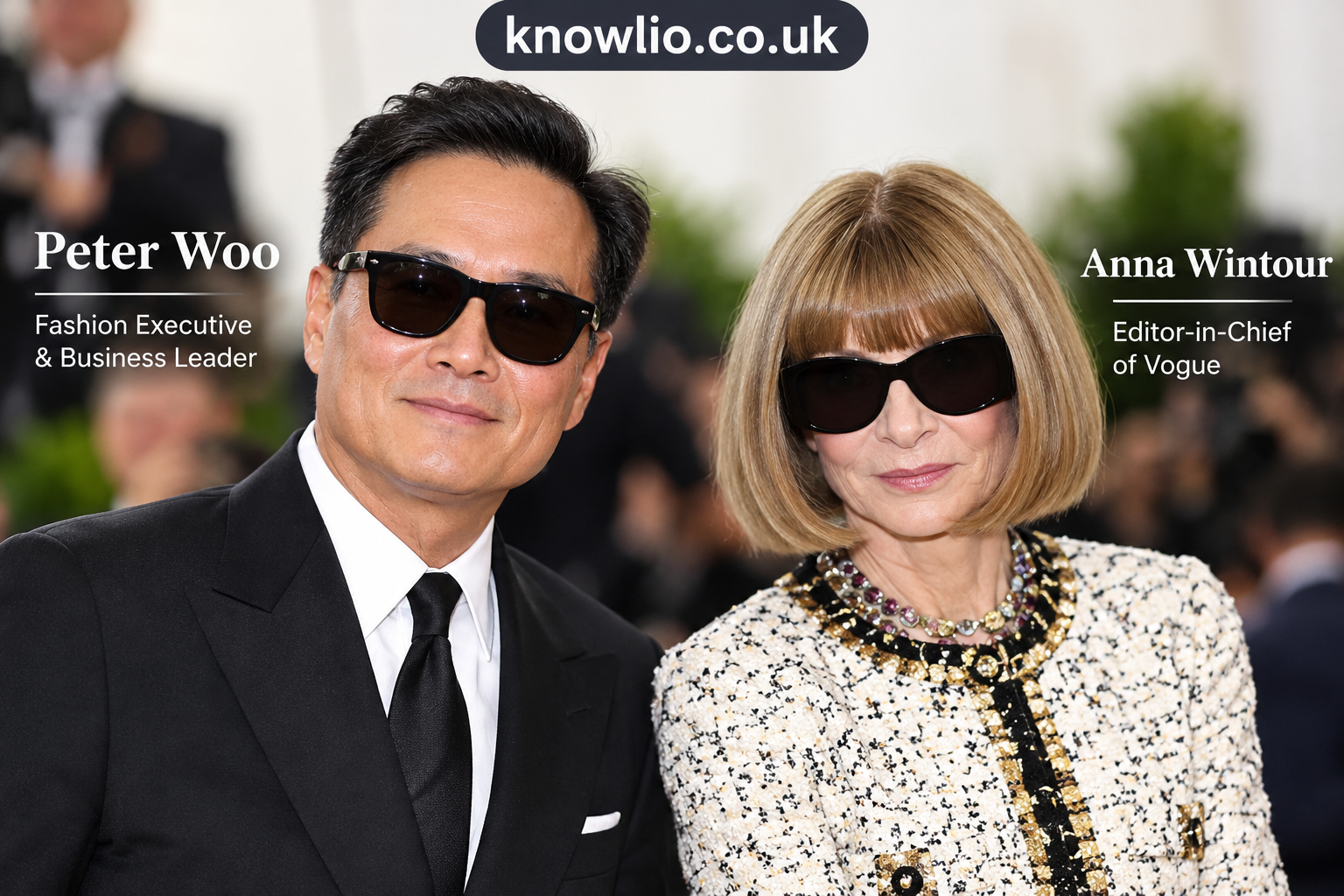
The names Peter Woo and Anna Wintour are associated with two influential areas of the international luxury industry: business leadership and fashion media. Peter Woo is a prominent Hong Kong businessman known for his leadership in property development, retail, and investment. Anna Wintour is a highly influential fashion editor and media executive whose work at Vogue has helped shape modern fashion journalism and global style culture.
Although their professional backgrounds are different, both figures offer an interesting perspective on how the luxury industry operates. One represents the business and retail side of the market, while the other represents the editorial and cultural influence that helps fashion brands reach audiences around the world.
People searching for Peter Woo and Anna Wintour may want to understand whether the two share a personal connection, have worked together, or simply belong to overlapping professional circles. It is important to distinguish documented facts from assumptions. Their involvement in related industries provides a useful basis for comparison, but a direct personal relationship or formal business partnership should not be assumed without reliable evidence.
This article explores their backgrounds, professional achievements, roles in the luxury sector, and possible points of industry overlap. It also answers common questions about their connection and explains why these two prominent names may attract interest together.
Table of Contents
- Who Is Peter Woo?
- Who Is Anna Wintour?
- What Connects Peter Woo and Anna Wintour?
- Peter Woo’s Influence on Luxury Business and Retail
- Anna Wintour’s Influence on Fashion and Media
- Business Leadership Versus Editorial Influence
- Why People Search for Peter Woo and Anna Wintour
- Frequently Asked Questions
- Conclusion
Who Is Peter Woo?
Peter Woo Kwong-ching is a Hong Kong businessman recognized for his leadership in property, investment, and luxury retail. Over several decades, he became an important figure in Hong Kong’s corporate landscape, Peter Woo and Anna Wintour particularly through his association with Wheelock and Company and The Wharf (Holdings). These businesses have been involved in major property developments and commercial assets, contributing to the growth of Hong Kong’s business environment.
Woo was born in Shanghai in 1946 and moved to Hong Kong as a child. He attended St. Stephen’s College before studying physics and mathematics at the University of Cincinnati in the United States. He subsequently earned a Master of Business Administration degree from Columbia Business School. His education and early banking experience provided a foundation for his later career in business leadership and investment.
After working at Chase Manhattan Bank, Woo joined the business interests of his father-in-law, shipping entrepreneur Yue-Kong Pao, in Hong Kong. He eventually assumed major leadership responsibilities in the family’s property and investment businesses. His career demonstrates how experience in finance, strategic management, Peter Woo and Anna Wintour and corporate development can contribute to building a diversified business group.
Peter Woo’s Major Business Interests
Woo’s professional legacy is closely associated with Wheelock and Company and The Wharf (Holdings), where he served as chairman for many years. Their activities extended beyond property development into commercial real estate, retail locations, hotels, and other business operations. He stepped down from the chairmanship of Wheelock in 2013 and retired from The Wharf’s board in 2015.
Another important part of Woo’s business background is the Lane Crawford Joyce Group, Peter Woo and Anna Wintour associated with luxury fashion retail and brand management in Greater China and Southeast Asia. Luxury retail depends on more than selling expensive products; it also involves selecting brands, understanding customers, developing desirable shopping environments, and building relationships with international fashion houses.
Beyond commercial activities, Woo has also been involved in public service and educational initiatives. His leadership roles have included the Hong Kong Trade Development Council and the Hospital Authority. He also founded Project WeCan, an initiative intended to support students through partnerships between schools, businesses, and community participants.
These activities illustrate the breadth of his career. Peter Woo and Anna Wintour Woo’s influence comes primarily from business ownership, corporate leadership, investment, and institutional involvement rather than from fashion journalism or public-facing celebrity culture.
Who Is Anna Wintour?
Anna Wintour is a British-American fashion editor and media executive widely recognized for her longstanding influence on the fashion publishing industry. She became editor-in-chief of American Vogue in 1988 and helped establish the magazine as an important platform for fashion photography, designer collections, celebrity culture, and discussions about style.
Born in London in 1949, Wintour developed an interest in fashion journalism early in her life. Peter Woo and Anna Wintour She began working in fashion publishing in the 1970s and later moved to the United States, where she held editorial positions at several publications. Her experience across different magazines helped prepare her for the leadership role that would make her one of the best-known figures in international fashion media.
Wintour’s editorial approach has combined established fashion traditions with new designers, changing cultural interests, and commercial opportunities. Through Vogue, she has helped influence how fashion is presented to readers and how designers, models, celebrities, and luxury brands communicate with the public. Her work has also extended beyond a single publication into broader media leadership.
Anna Wintour’s Role at Vogue and Condé Nast
For decades, Wintour’s work at Vogue has made her an influential participant in the international fashion conversation. The magazine’s coverage of designers, collections, photography, and cultural trends can help introduce new creative talent and bring established luxury labels to wider audiences.
Her responsibilities expanded beyond the American edition of Vogue. Peter Woo and Anna Wintour She became a senior leader at Condé Nast, the publishing company behind several major magazines. In 2025, Wintour stepped down from her position as editor-in-chief of American Vogue while continuing in senior roles, including global editorial director of Vogue and chief content officer at Condé Nast. These responsibilities distinguish her from an editor whose work is limited to a single publication.
Wintour is also closely associated with the Met Gala, an annual fundraising event for the Metropolitan Museum of Art’s Costume Institute. The event brings together fashion designers, celebrities, artists, and influential figures from different industries. It demonstrates how fashion can operate as a combination of creative expression, media attention, fundraising, and brand visibility.
Her career shows that editorial leadership can influence the fashion industry well beyond magazine pages. Through publishing, cultural events, and relationships with designers, Wintour has helped shape conversations about which trends, personalities, and creative ideas receive international attention.
What Connects Peter Woo and Anna Wintour?
The most straightforward way to compare Peter Woo and Anna Wintour is through their involvement in the wider luxury industry. Woo’s business interests have included luxury retail and brand management, while Wintour’s career has centered on fashion publishing, editorial leadership, and cultural influence. Both operate in areas that help shape how consumers encounter luxury brands.
However, an important distinction must be made. Their professional backgrounds do not, by themselves, establish that they are relatives, close friends, romantic partners, or business collaborators. Peter Woo and Anna Wintour A direct personal relationship or joint business project should only be described as a fact when supported by credible reporting or official documentation.
The available biographical information establishes their individual careers much more clearly than any direct connection between them. Readers should therefore approach claims about a shared history carefully, particularly when those claims appear on websites that provide no supporting evidence.
A Shared Interest in the Luxury Market
Luxury fashion involves several connected activities, including designing products, distributing them through retailers, presenting collections in the media, and creating a recognizable brand identity. Woo’s association with luxury retail and Wintour’s editorial work place them in different parts of this larger system.
Retailers help determine which products and designers are available to customers. They also create shopping experiences and develop relationships with fashion houses. Editors, meanwhile, select stories, commission photography, feature designers, and interpret emerging trends for readers. Both activities can influence the commercial success and public perception of fashion brands.
This overlap provides a reasonable explanation for comparing their careers. Nevertheless, participating in the same broad industry is not proof that two people have worked together. Any claim about a specific meeting, shared project, or personal association requires evidence beyond their professional interests.
Peter Woo’s Influence on Luxury Business and Retail
Peter Woo’s connection to the luxury sector is rooted in the commercial side of the market. His association with the Lane Crawford Joyce Group places him within a retail environment that connects international fashion labels with customers in Asian markets. This part of the industry requires an understanding of consumer preferences, brand positioning, product selection, and long-term business strategy.
Luxury retailers perform a different function from fashion magazines. They make products available to consumers, manage physical or digital shopping experiences, and build commercial relationships with designers and suppliers. Their decisions can affect which brands gain access to particular markets and how those brands are presented to customers.
Woo’s broader business career also demonstrates the importance of diversification. His leadership involved property, retail, and investment interests rather than a single fashion-related activity. Such diversification can provide businesses with different sources of revenue, although each sector also carries its own commercial risks and challenges.
The Importance of Asian Luxury Markets
Hong Kong has long served as an important commercial center connecting international businesses with consumers across Asia. Its position in global trade, tourism, finance, and retail has helped make it a significant location for luxury shopping and brand distribution.
For luxury retailers, success in Asian markets depends on understanding local consumer expectations while maintaining the identity of international brands. Store locations, customer service, product availability, and cultural awareness can all influence how shoppers experience a retailer. Business leaders working in this environment must balance local market knowledge with international commercial relationships.
Woo’s retail interests fit into this broader context. His career illustrates how business leadership can connect international fashion labels with regional customers through retail operations and brand management. This is a different form of influence from editorial coverage, but it remains an important part of the luxury ecosystem.
It would be inaccurate, however, to attribute specific retail decisions or market outcomes to a partnership with Wintour without evidence of direct collaboration. The significance of Woo’s business career can be understood independently of any unverified connection between the two figures.
Anna Wintour’s Influence on Fashion and Media
Anna Wintour’s influence is primarily associated with fashion journalism, publishing, and the presentation of designers and collections to international audiences. Through Vogue and her wider responsibilities at Condé Nast, she has occupied a position where editorial decisions can help determine which fashion stories receive attention.
Fashion media does not simply report on clothing. It also interprets trends, introduces creative talent, presents visual ideas, and connects fashion with art, entertainment, and wider cultural discussions. A prominent publication can give designers exposure and help audiences understand the ideas behind new collections.
Editorial attention does not automatically guarantee commercial success, but it can contribute to a brand’s visibility and reputation. For established luxury houses, media coverage can reinforce an existing identity. For emerging designers, it can introduce their work to customers, retailers, and industry professionals who may not otherwise encounter it.
Vogue’s Role in the Fashion Industry
Vogue has become an internationally recognized fashion publication with editions and editorial teams serving different markets. Its influence comes partly from fashion photography, interviews, runway coverage, cultural reporting, and its ability to bring designers and public figures into the same conversation.
Wintour’s leadership has been associated with an editorial style that combines high-fashion imagery with celebrity coverage and broader cultural interests. This approach helped make Vogue relevant to readers beyond those who follow the technical details of fashion design. It also reinforced the relationship between luxury brands, entertainment, and public attention.
The Met Gala is another important example of the connection between fashion and media. Its red-carpet coverage generates extensive discussion about designers, clothing, creative interpretation, and celebrity style. The event also supports the Costume Institute at the Metropolitan Museum of Art through fundraising.
These activities help explain why Wintour’s career is often discussed in relation to luxury brands and influential business figures. Fashion publishing operates within a network of designers, retailers, advertisers, cultural institutions, and consumers. That network creates opportunities for professional overlap, but individual connections must still be established through reliable evidence.
Business Leadership Versus Editorial Influence
Comparing Peter Woo and Anna Wintour reveals two different ways people can influence the luxury market. Woo’s career demonstrates the role of corporate leadership, investment, and retail operations. Wintour’s career illustrates the influence of editorial judgment, fashion publishing, and cultural visibility.
Both forms of influence are important, but they work through different mechanisms. A business leader may make decisions about investments, commercial properties, retail strategy, and brand management. An editor may decide which designers to feature, which trends to explore, and how fashion stories are presented to the public.
Their careers also demonstrate why the luxury industry cannot be understood through product design alone. The sector depends on a wider network of manufacturers, retailers, publishers, creative professionals, investors, and customers. Each group contributes to how luxury products are developed, marketed, distributed, and understood.
Different Careers, Related Industries
Woo’s professional background emphasizes long-term business development and the management of commercial interests. His career includes leadership in property and investment, alongside his association with luxury retail. These activities require strategic planning, financial judgment, and an understanding of changing market conditions.
Wintour’s professional background emphasizes editorial leadership and cultural communication. Her influence depends on recognizing creative talent, shaping magazine coverage, and helping audiences engage with designers and fashion trends. Her work requires a different set of skills, including editorial judgment, creative direction, and an understanding of public interest.
The two careers can therefore be compared without suggesting that they have a direct professional relationship. They illustrate how business decisions and media attention can influence the same industry from different directions.
For readers interested in fashion business, this comparison provides a useful way to understand the relationship between commerce and culture. Retailers help bring products to market, while fashion media helps communicate their significance to audiences. Neither function tells the entire story of luxury fashion, but both are important to its development.
Why People Search for Peter Woo and Anna Wintour
There are several possible reasons why readers may search for Peter Woo and Anna Wintour together. One explanation is the shared association with luxury fashion and international business. Woo’s retail interests and Wintour’s fashion media career make them relevant to discussions about how luxury brands operate and build their reputations.
Another possibility is curiosity about their professional networks. Influential figures in fashion, retail, publishing, and business often participate in overlapping industry events and commercial environments. Readers may therefore wonder whether two well-known people have met or collaborated. However, that possibility should not be confused with confirmed evidence of a relationship.
Search interest can also arise when articles, social media posts, or online discussions mention two people in the same context. Without reliable evidence explaining the origin of a particular search trend, it is not possible to determine exactly why people are interested in the names together.
How to Evaluate Claims About Their Connection
Readers looking for information about Peter Woo and Anna Wintour should prioritize credible biographies, established news publications, company announcements, and official organizational profiles. These sources can help establish career histories, professional appointments, and documented collaborations.
It is also helpful to distinguish between a factual statement and an interpretation. For example, saying that both figures are connected to the luxury industry is supported by their professional backgrounds. Saying that they are business partners requires separate evidence of a partnership.
The same principle applies to claims about personal relationships. A shared industry, public appearance, or mention in an article does not establish friendship, family ties, or a romantic relationship. Reliable reporting should identify the evidence behind such claims.
Taking this approach helps readers understand the subject without relying on speculation. It also supports a more trustworthy online information environment, where articles explain what is known and acknowledge what remains unconfirmed.
Frequently Asked Questions
1. Who are Peter Woo and Anna Wintour?
Peter Woo is a Hong Kong businessman known for his former leadership of Wheelock and Company and The Wharf (Holdings), as well as his association with luxury retail. Anna Wintour is a prominent fashion editor and media executive known for her long career at Vogue and her senior leadership roles at Condé Nast.
2. Are Peter Woo and Anna Wintour related?
A family relationship between Peter Woo and Anna Wintour has not been established by the reliable biographical information reviewed for this article. Their involvement in related areas of the luxury industry is not evidence that they are relatives.
3. Have Peter Woo and Anna Wintour worked together?
A direct business partnership or joint project between them has not been established by the sources reviewed. Although their professional interests overlap within the wider luxury industry, a specific collaboration would require independent confirmation.
4. What is Peter Woo best known for?
Peter Woo is best known for his leadership in Hong Kong business, particularly through Wheelock and Company and The Wharf (Holdings). His career has also involved investment, public service, and luxury retail interests associated with the Lane Crawford Joyce Group.
5. What is Anna Wintour’s role in the fashion industry?
Anna Wintour is known for her longstanding influence on fashion publishing through Vogue and her senior roles at Condé Nast. Her work has helped shape fashion coverage, support designer visibility, and connect fashion with entertainment and wider cultural discussions.
Conclusion
Peter Woo and Anna Wintour represent two distinct but related areas of the luxury industry. Woo’s career reflects the business side of luxury, including property, investment, retail, and corporate leadership. Wintour’s career reflects the influence of fashion media, editorial decisions, and cultural visibility.
Their professional backgrounds provide an interesting comparison for anyone seeking to understand how luxury brands reach consumers and maintain their reputations. Retail operations help connect products with customers, while fashion publications introduce designers, interpret trends, and shape public conversations about style.
The key point is that a shared connection to luxury fashion does not establish a direct personal or business relationship. Based on the reliable biographical information reviewed, their individual achievements are well documented, while a specific connection between them remains unconfirmed.
For readers researching Peter Woo and Anna Wintour, the most useful approach is to focus on their established careers and the different ways they have influenced their respective fields. This provides a clearer, more accurate understanding than relying on unverified claims about their relationship.





Leave a Reply